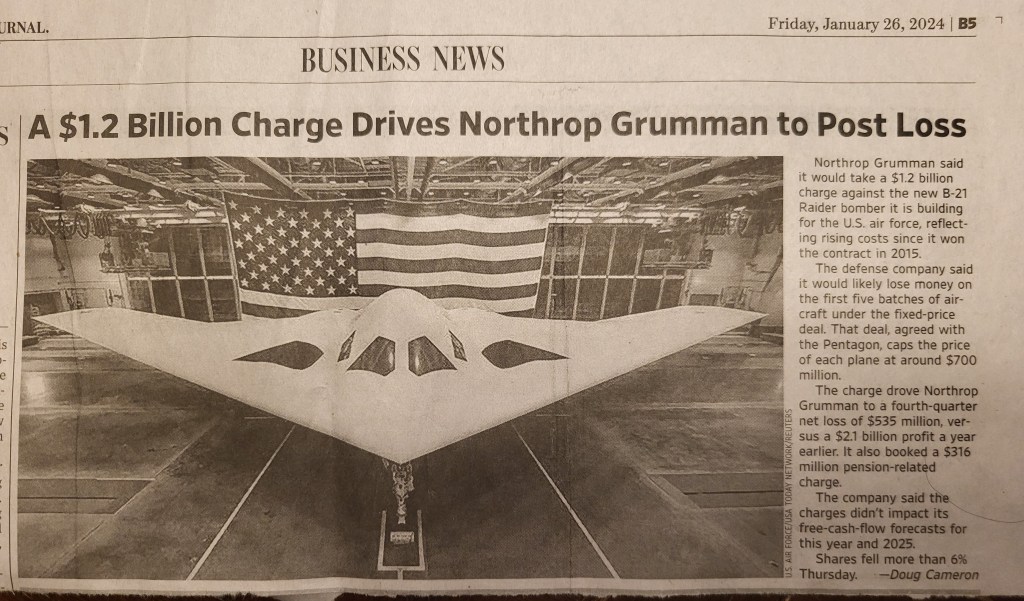
In defense contracting, where billion-dollar projects can make or break a company’s bottom line, choosing the right pricing strategy is critical. Recently, Northrop Grumman made headlines with a hefty $1.2 billion charge against the B-21 Raider bomber. This charge reflects the escalating costs since the contract was awarded in 2015. However, buried within this news is a valuable lesson on the efficacy of fixed-fee contracts, despite the initial challenges they may pose.
The B-21, touted as a crucial component of the nation’s defense arsenal, has encountered significant cost overruns under the fixed-price deal. Northrop Grumman, under the terms of the contract, faces the daunting task of delivering each plane at a capped price of approximately $700 million. However, rising costs have rendered this target increasingly elusive, leading to financial repercussions for the company.
Despite the apparent setbacks, fixed-fee contracts offer several advantages that can outweigh the initial challenges:
- Budget Certainty: Fixed-fee contracts provide the client, in this case, the Pentagon, with a clear understanding of the project’s costs upfront. This budget certainty is invaluable in long-term planning and allocation of resources.
- Incentivizing Efficiency: By capping the price of each unit, fixed-fee contracts incentivize contractors to streamline operations, control costs, and enhance efficiency to maintain profitability. This drive for efficiency ultimately benefits both parties, fostering a collaborative environment focused on achieving project goals.
- Risk Mitigation: While Northrop Grumman may currently be grappling with cost overruns, the fixed-price nature of the contract shields the government from bearing the brunt of these additional expenses. It transfers the risk of cost escalation onto the contractor, encouraging them to manage risks effectively throughout the project lifecycle.
- Accountability and Transparency: Fixed-fee contracts promote accountability and transparency by holding contractors accountable for meeting predefined deliverables within the agreed-upon budget. This fosters trust between the contractor and the client, crucial for the success of complex defense projects.
- Future Cash Flows: Each of the subsequent aircraft and the support services will be priced to deliver necessary profitability and consider the historical investment. Platforms such as the B-21 will lock in the future cash flows since the ‘stickiness’ from the knowledgebase prevents customers from going elsewhere (aka no further competition on this platform)
Despite the challenges faced by Northrop Grumman, it’s essential to recognize that fixed-fee contracts remain a prudent choice for defense projects. The B-21 Raider project serves as a testament to the inherent risks associated with such contracts, but it also underscores their long-term benefits when executed effectively. By embracing these contracts with a proactive approach to risk management and cost control, contractors can navigate complexities while delivering value to their clients and stakeholders. Revenues in the decades to come are likely to deliver much better profitability.
 Pricing, well played.