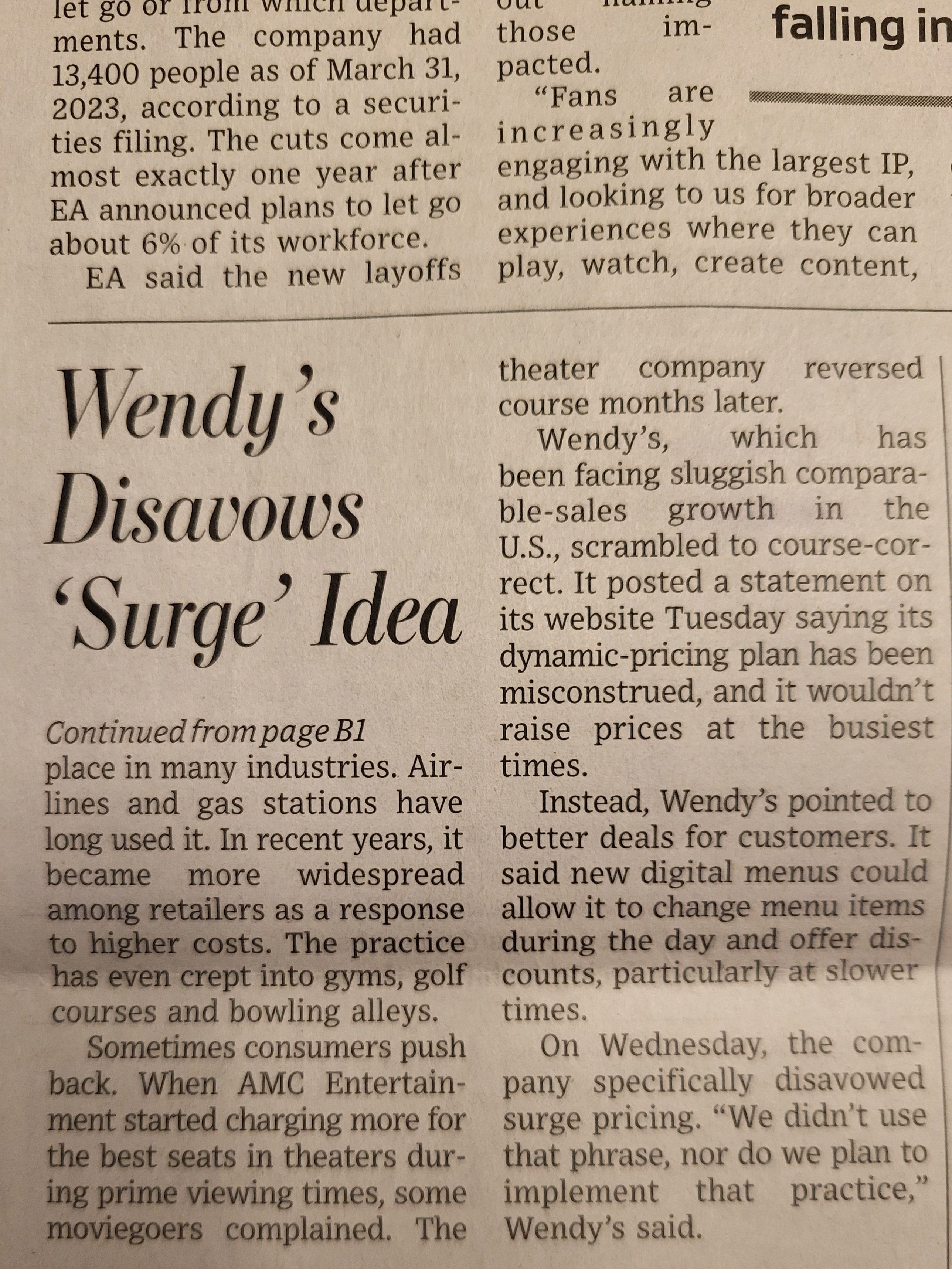
Dynamic pricing is the approach to change price frequently in order to maximize sales $ and profitability. For most consumers, there are only a few acceptable reasons why they would be comfortable with seeing different prices. Many applications of actual dynamic pricing do not align with value to customer and thus lead to the blowback like Wendy’s will likely experience.
There are five key reasons where dynamic pricing work well:
- Price is not well known outside an expected range
- Customers don’t make many repeated transactions for the same product
- Costs are clearly impacted and are significant
- Supply is variable / limited
- Customer segment is not price sensitive
Uber is held up as the model for dynamic pricing because it makes sense for them. From my experience in NYC, most people don’t know the cost of a taxi ride outside a general range. It is also understandable that demand increases in situations like a rainy day or if there is an event. Finally, customers have options that are cheaper (subway) or at provide more clear pricing (taxi).
Simply having the ability to change price often is not a clear reason to do so. The “happy hour discount” with x% off list price is probably the best path for low cost transactions, but it is not quite dynamic if it makes the same moves. Consumer should feel good about the purchase to repeat it; not ripped off because the price changed on them.
 Pricing, well played.